
The internet is flooded with business advice. Everyone tells you to start a SaaS, launch on Amazon FBA, become a dropshipper, or offer freelance services. And because everyone knows these models, the markets are saturated, margins are thin, and competition is brutal.
Meanwhile, a smaller group of entrepreneurs has discovered something different. They’re operating business models that most people haven’t heard of—or dismissed as too weird or too complex. These models are quietly generating millions in revenue while the masses fight over the scraps of popular approaches.
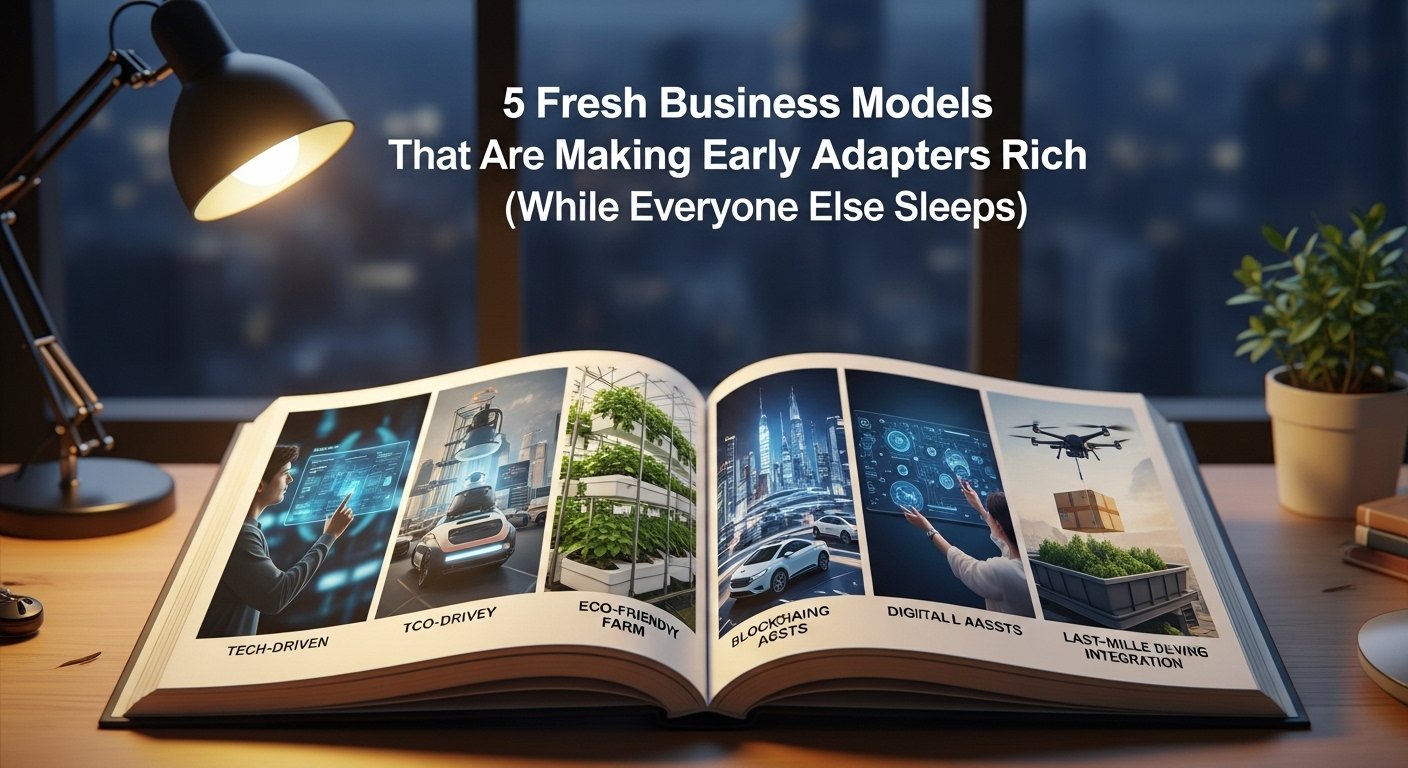
Here are five fresh business models that very few people know about, understand, or are executing properly.
The Pattern: Every business model on this list was “unknown” at some point. Amazon FBA was unknown in 2010. Dropshipping was unknown in 2015. Now everyone knows them. These five models are at that same inflection point—early enough to be first movers, established enough to have proven success.
Business Model #1: Reverse Vending Machine Networks
The Concept: You install vending machines that pay people to recycle—not sell products. Every bottle and can returned earns cash or store credit. You profit from the押金 (deposit) spread, selling recycled materials, and carbon credits.
Traditional vending machines sell products. Reverse vending machines buy them back. In countries with bottle deposit schemes (Germany, Sweden, Norway), these machines have been standard for decades. But in the United States, Canada, Australia, and most of Asia? The model is barely deployed.
How It Works
- Install machines in high-traffic locations (grocery stores, malls, campuses, transit stations)
- Pay for returns: Users scan bottles/cans, receive cash or QR code vouchers
- Collect materials: Your truck picks up compacted bottles from machines
- Sell to recyclers: Glass, plastic, and aluminum have resale value
- Claim carbon credits: Governments pay for verified recycling
- Generate transaction fees: Some states pay per bottle returned
The Economics
| Revenue Stream | Potential Income | Notes |
|---|---|---|
| State Recycling Fees | $0.05-$0.10 per container | 10+ states have deposit programs |
| Material Sales | $200-$500/ton (aluminum) | Market prices fluctuate |
| Carbon Credits | $15-$50/ton CO2 avoided | Growing market |
| Advertising Screens | $300-$800/machine/month | Screens for digital ads |
| Sponsorship Deals | $10K-$50K/retailer | Brands sponsor locations |
A single machine in a high-traffic location can process 500-2000 containers daily, generating $50-$200 in daily state fees alone.
Why It’s Still Unknown
- Requires significant upfront investment ($5,000-$15,000/machine)
- Regulatory complexity varies by state/country
- Logistics of material collection
- Most entrepreneurs don’t think “sell recycling” is a business
- Recurring revenue from each machine
- Government incentives and subsidies available
- Massive environmental angle for PR and partnerships
- Scalable network effect—more machines = more efficiency
- Young demographic interaction—high engagement
Real-World Example: Tomra (Norwegian company) does over $1 billion in revenue with reverse vending globally. But the US market is still largely unaddressed by small entrepreneurs—vast opportunity for regional players.
Getting Started
- Research your state: Check deposit programs at container-recycling.org
- Source machines: Tomra, Melitta, or Chinese manufacturers on Alibaba
- Secure locations: Grocery chains, universities, stadiums
- Register with state programs: Become certified redemption center
- Build logistics: Truck route for material collection
Learn More:
- Container Recycling Institute: container-recycling.org
- Tomra Systems: tomra.com (machine manufacturer)
- Bottle Bill Resource Guide: bottlebill.org
Business Model #2: Fractional Ownership of Physical Assets
The Concept: Buy expensive assets outright, then sell fractional ownership shares to multiple investors. You handle management and take a percentage; investors get returns without the hassle of ownership.
Real estate fractional ownership exists. But the same model works for hundreds of other asset classes that nobody is fractionalizing yet.
What Can Be Fractionalized?
- Commercial laundry equipment: High-end washers/dryers for apartment buildings
- Cold storage units: Walk-in freezers for restaurants and food businesses
- Medical equipment: MRI machines, CT scanners, ultrasound units
- Construction equipment: Excavators, cranes, concrete mixers
- Event equipment: Inflatable rentals, tent structures, stages
- Agricultural equipment: Tractors, combines, processing equipment
- Aircraft: Small planes, helicopters for charter
- Luxury items: Designer handbags, watches, wine collections
The Economics
Example: Commercial laundry room in an apartment building
| Item | Cost | Revenue Potential | ROI Timeline |
|---|---|---|---|
| 4 Commercial Washers | $12,000 | $800/month | 15 months |
| 4 Commercial Dryers | $8,000 | $600/month | 13 months |
| Installation | $2,000 | – | – |
| Maintenance (yearly) | $1,500 | – | – |
| NET ANNUAL RETURN | $22,000 | $14,400 | 65%+ |
You could buy this system for $22,000, sell 50% shares to 2-3 investors at $11,000 each, and still earn management fees while using their capital.
The Platform Play
Even better: build a platform that enables fractional ownership at scale. Companies like Pacaso (real estate) and YieldX (equipment) are doing this, but the market is enormous and fragmented.
- Acquire assets: Buy physical equipment or property
- Create LLC for each asset: Legal separation of investors
- Sell shares: Market to accredited investors, family offices
- Manage operations: Handle maintenance, billing, repairs
- Collect fees: Management fee (5-10%) + performance share
Legal Framework: Fractional ownership typically requires securities compliance. Work with an attorney to structure offerings as either Regulation D private placements or membership interest in LLCs.
Why It’s Still Unknown
- Requires capital to acquire initial assets
- Securities law compliance is complex
- Management complexity scales with portfolio
- Requires trust—investors must believe you’ll manage well
- Passive income from appreciation + cash flow
- Leverage other people’s money (OPM)
- Asset-backed security—real value underneath
- Multiple revenue streams (cash flow + appreciation + fees)
Real-World Example: Investors who bought into fracitionalized apartment laundry rooms in 2015 are now earning 15-25% annual returns on assets that have also appreciated 40%.
Business Model #3: Intellectual Property Licensing Farms
The Concept: Systematically create intellectual property (patents, trademarks, book rights, course content, software) and license it for recurring royalties. You’re not selling products—you’re selling the right to use ideas.
Most entrepreneurs think in terms of selling products or services. But the most valuable businesses sell the right to use ideas. A single successful patent can generate millions in royalties. A bestselling book can generate decades of income. A course framework can be licensed to hundreds of instructors.
What Can Be Licensed?
| IP Type | Creation Cost | Royalty Potential | Duration |
|---|---|---|---|
| Utility Patents | $5,000-$20,000 | 3-8% of sales | 20 years |
| Trademarks | $500-$2,000 | 2-5% of gross sales | Indefinite (renewable) |
| Book Rights | $0-$10,000 | 10-15% of net sales | Life + 70 years |
| Online Courses | $2,000-$20,000 | $500-$5,000/licensee | Indefinite |
| Software API | $10,000-$100,000 | 20-40% of reseller revenue | Perpetual |
| Training Systems | $5,000-$50,000 | $1K-$20K/quarter | Indefinite |
The IP Farming Strategy
Rather than betting everything on one product, IP farmers create a portfolio of intellectual property across multiple categories:
- Identify underserved niches: Look for industries without modern IP holders
- Create foundational IP: Patents, trademarks, content libraries
- Register protection: File patents, trademarks, copyrights
- Build licensing infrastructure: Contracts, sales materials, discovery process
- Market to licensees: Trade shows, direct outreach, licensing agents
- Enforce and defend: Monitor for infringement, defend IP
Examples of IP Licensing
- Polaroid inventor Edwin Land: Built empire on continuous patent licensing
- George Lucas: Star Wars franchise value built on character/IP licensing
- Gary Vaynerchuk: Built Wine Library TV, licensed course framework to 100+ instructors
- Generic pharmaceutical companies: License drug formulations for generic versions
Getting Started as an IP Farmer
- Identify your expertise: What knowledge do you have that others would pay to use?
- Audit existing IP: What have you already created that could be licensed?
- Protect it: File provisional patents, register trademarks
- Create a licensing deck: Pitch materials for potential licensees
- Join licensing networks: Licensing International (licensinginternational.org)
Learn More:
- Licensing International: licensinginternational.org
- USPTO: uspto.gov (patent filing)
- How to License Your Ideas: Search on Udemy for courses
- Rich Dad Poor Dad author: Robert Kiyosaki on IP ownership
The Leverage: A patent filed this year could be generating royalties in 3-5 years—and income for decades. You’re not trading time for money; you’re renting out ideas indefinitely.
Business Model #4: Hyper-Local Subscription Box Networks
The Concept: Create a subscription box business that sources exclusively from local artisans and businesses within a specific radius. Subscribers get curated local products; local businesses get guaranteed sales; you take a margin.
Subscription boxes are not new—ButcherBox, Dollar Shave Club, and Stitch Fix proved the model. What IS new: applying the model hyper-locally, creating a subscription marketplace that supports local economies while generating recurring revenue.
Why Local Changes Everything
- Supply chain simplicity: Pick up from local suppliers directly
- Marketing advantage: “Support local” resonates powerfully
- Community connection: Subscribers feel part of something
- Lower logistics costs: Everything within driving distance
- Sustainability angle: Reduced shipping emissions
- News/PR hooks: Media loves local business stories
The Model Structure
REVENUE MODEL:
- Subscription: $29-$49/month per subscriber
- Supplier commission: 15-30% of wholesale cost
- Sponsor partnerships: Local businesses sponsor boxes
- Wholesale marketplace: Sell direct to non-subscribers

COST STRUCTURE:
- Box and packing materials
- Local pickup logistics
- Marketing and acquisition
- Fulfillment labor

MARGIN TARGET:
- 40-60% gross margin typical
- $15-$25 profit per monthly subscriber
- 500 subscribers = $7,500-$12,500/month
What Goes in the Box?
- Food items: Jams, sauces, snacks, spices
- Beverages: Local coffee, craft sodas, wine
- Personal care: Soaps, lotions, candles
- Home goods: Handmade candles, ceramics, textiles
- Artisanal items: Jewelry, art prints, crafts
- Surprise elements: Restaurant gift cards, local experiences
Why It’s Still Unknown
- Requires significant local supplier relationship building
- Logistics more complex than single-source fulfillment
- Limited geographic scalability
- Supplier quality consistency challenges
- Defensible locally—hard for Amazon to replicate
- Community loyalty is powerful retention tool
- Multiple revenue streams (subscriptions + commissions + sponsors)
- Excellent PR and partnership opportunities
- Low startup cost compared to inventory businesses
Real-World Example: MarketBox in Austin, Texas built a hyper-local subscription service generating $200K+ annual revenue by focusing exclusively on Austin-area artisans. Local press coverage drove organic growth.
Getting Started
- Define radius: 25-50 mile radius from your fulfillment point
- Build supplier relationships: Visit farmer’s markets, artisan fairs
- Create sampling program: Test products with small groups
- Build subscription funnel: Landing page, social proof, early adopter discounts
- Launch pilot: 50-100 subscribers in first cohort
- Scale with retention: Don’t grow faster than you can maintain quality
Learn More:
- Subkit: subkit.com (subscription business platform)
- Crated: crated.com (subscription box fulfillment)
- Reddit r/SubscriptionBoxes: Community insights
Business Model #5: Synthetic Media Licensing
The Concept: Create synthetic media assets (AI-generated images, voice clones, digital avatars, virtual influencers) and license them to brands, creators, and businesses. You’re not selling the content—you’re licensing the rights to use specific synthetic personas.
The Taylor Swift deepfake problem everyone’s worried about? That’s actually a business opportunity in reverse. Instead of using celebrities’ likenesses without permission, create synthetic celebrities you OWN—and license them.
What Can Be Synthetic?
- Virtual influencers: CGI characters with millions of followers
- Voice clones: Custom voices for audiobooks, ads, content
- Face models: Licensed facial likenesses for advertising
- AI-generated art: Curated styles licensed to brands
- Digital twins: Virtual versions of real people (with permission)
- Avatar systems: Customizable digital characters for creators
The Economics
| Synthetic Asset | Creation Cost | License Fee | Market Size |
|---|---|---|---|
| Virtual Influencer | $10K-$50K | $5K-$50K/campaign | $500M+ growing |
| Voice Clone | $2K-$10K | $500-$5K/project | $1B+ (audiobooks alone) |
| Face Model License | $5K-$20K | $1K-$20K/brand deal | $2B+ advertising |
| AI Art Style | $1K-$10K | $200-$2K/license | $10B+ design |
Building a Synthetic Media Portfolio
- Create owned assets: Develop virtual characters, voice models, visual styles
- Build social presence: Give virtual influencers organic following
- Establish licensing terms: Create clear usage rights and pricing
- Register IP protection: Trademark characters, copyright assets
- Market to brands: Agencies, marketers, content creators
- Expand portfolio: More assets = more licensing opportunities
Why It’s Still Unknown
- Technical barrier—requires AI/media expertise
- Evolving legal landscape around synthetic content
- Ethical considerations and brand safety concerns
- Requires significant initial investment in creation
- Massive scalability—same asset licensed infinitely
- No physical inventory or fulfillment
- Growing demand as AI becomes mainstream
- First-mover advantage in specific niches
- High perceived value, low actual cost to deliver
The Legal Reality: Synthetic media licensing is legal but requires careful structuring. Clearly define usage rights, geographic limitations, and content restrictions in all contracts. Work with entertainment attorneys familiar with this emerging space.
Getting Started
- Learn the technology: Midjourney, Runway, Eleven Labs for creation
- Choose a niche: Fashion? Gaming? Corporate training?
- Create 3-5 owned characters: Invest in quality initial assets
- Build social presence: Give them personalities and followings
- Create licensing packages: Define what’s included at each price tier
- Contact brands: Pitch as cheaper, more flexible alternative to real influencers
Learn More:
- Synthetic Media Weekly: newsletter on Substack
- AI Foundation: aifoundation.com
- Ready Player Me: readyplayer.me (avatar platform)
- Eleven Labs: elevenlabs.io (voice cloning)
Comparing the Five Models
| Model | Startup Cost | Time to Revenue | Scalability | Complexity |
|---|---|---|---|---|
| Reverse Vending | $25,000+ | 3-6 months | High | Medium-High |
| Fractional Ownership | $10,000+ | 1-3 months | Medium | High |
| IP Licensing | $2,000+ | 6-24 months | Very High | Medium |
| Local Subscription | $1,000+ | 1-2 months | Low-Medium | Low-Medium |
| Synthetic Media | $5,000+ | 3-12 months | Very High | High |
Which Model Is Right For You?
Each of these business models suits different types of entrepreneurs:
- Choose Reverse Vending if you have significant capital, love logistics, and believe in the sustainability thesis
- Choose Fractional Ownership if you have expertise in a physical asset category and want to leverage other people’s money
- Choose IP Licensing if you’re a creator, inventor, or expert with knowledge others would pay to access
- Choose Local Subscription if you love community building, have strong local networks, and prefer tangible products
- Choose Synthetic Media if you’re tech-forward, creative, and want to build assets that scale infinitely
The Common Thread: All five models share one characteristic—they’re not about selling products or services in the traditional sense. They’re about creating systems, assets, or platforms that generate recurring value. That’s what separates $100K/year businesses from million-dollar enterprises.
Your 30-Day Action Plan
- Week 1: Research
- Read about all 5 models
- Identify which 1-2 resonate most
- Research regulations and requirements for your region
- Week 2: Ideation
- Narrow down to your chosen model
- Identify your specific niche or angle
- Research competitors (if any exist)
- Week 3: Planning
- Create basic business plan
- Calculate startup costs and projected revenue
- Identify resource gaps
- Week 4: Action
- Take first concrete step (register domain, contact supplier, file provisional patent)
- Start building minimum viable presence
- Set 90-day milestone goals
The First-Mover Advantage: Every business model on this list will become “known” eventually. The question is whether you want to be the one explaining to journalists in 2030 how you got in early—or the one reading that article wondering what could have been.
Related Articles
- How to Start Your Own Brand from China
- Lowest Cost Gadgets You Can Source from China
- 10 Time-Saving Gadgets Most People Don’t Know About