
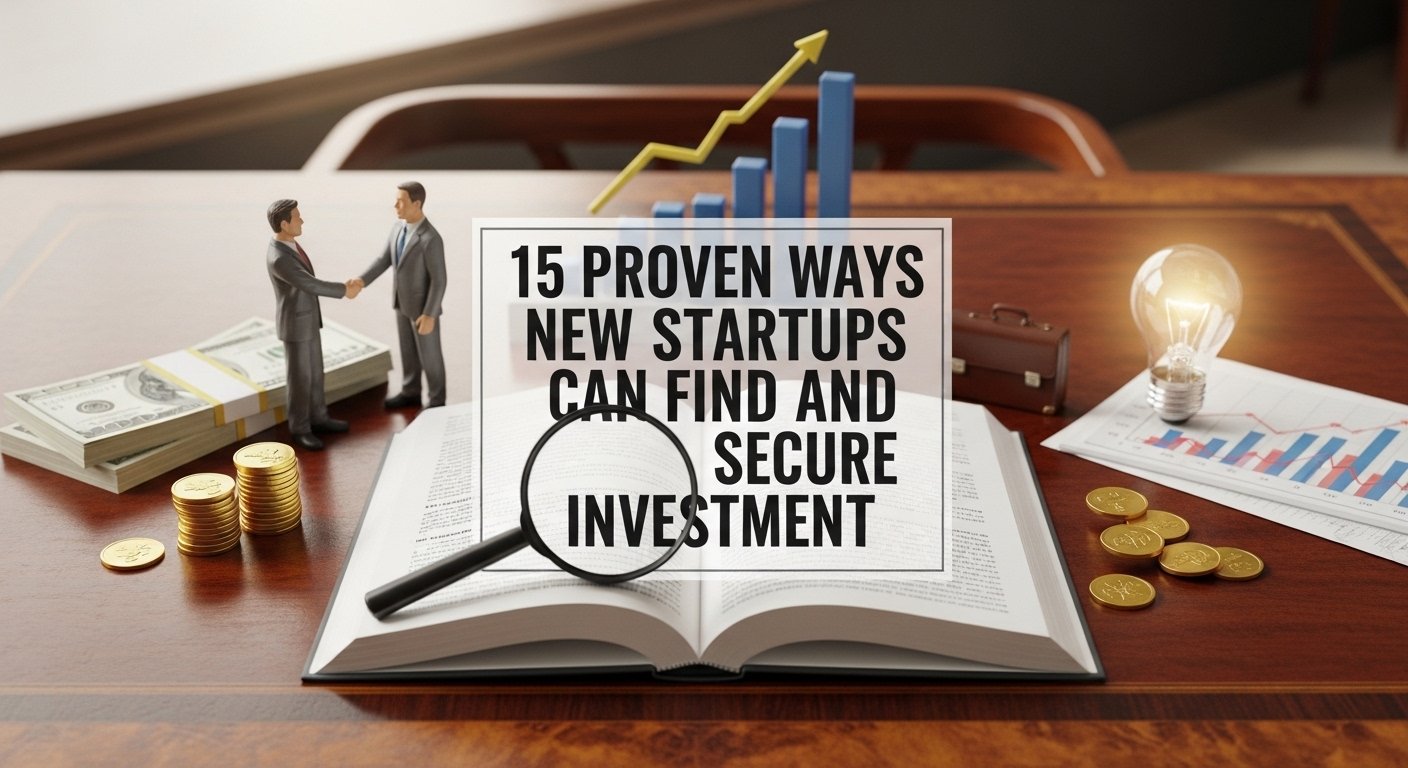
You’ve built a prototype. You have early customers. You’ve validated that people will pay for what you’ve created. Now you need capital to scale—but the traditional path of walking into a bank with a business plan doesn’t work for startups.
The good news? There has never been more ways to fund a startup. From angel investors scrolling Twitter to government grants for specific industries, from crowdfunding campaigns that go viral to revenue-based financing that grows with your business—the funding landscape has fundamentally changed.
This guide covers 15 distinct funding methods, organized by stage and type. Whether you’re pre-revenue with just an idea, or generating revenue but need fuel to scale, there’s a path for you.
The Key Insight: Most founders approach funding wrong. They think “find an investor and pitch them.” But successful fundraising is about building relationships, creating traction, and finding the RIGHT investor for YOUR stage, industry, and goals. This guide teaches you all the paths—not just the VC path everyone talks about.
Funding Methods at a Glance
| Method | Best For | Amount | Stage | Difficulty |
|---|---|---|---|---|
| 1. Bootstrapping | Service businesses, solo founders | Self-funded | Idea to revenue | Medium |
| 2. Friends & Family | Early validation | $5K-$250K | Idea to seed | Low |
| 3. Angel Investors | Pre-seed to seed | $25K-$500K | Early traction | Medium |
| 4. AngelList & Platforms | Online deal flow | $10K-$250K | Pre-seed to seed | Low-Medium |
| 5. Venture Capital | Scalable tech startups | $500K-$20M+ | Seed to Series A | High |
| 6. Accelerators | Mentorship + capital | $50K-$500K | Early stage | Medium |
| 7. Incubators | Longer-term support | $25K-$250K | Idea to early | Medium |
| 8. Crowdfunding | Consumer products,验证 | $5K-$1M+ | Pre-launch | Medium |
| 9. Government Grants | Tech, R&D, specific sectors | $25K-$2M | Any stage | Medium |
| 10. Strategic Investors | B2B, deeptech, SaaS | $100K-$5M | Early to growth | Medium |
| 11. Revenue-Based Financing | Revenue-generating startups | $50K-$2M | Post-revenue | Low-Medium |
| 12. SBIC Program | SBA-backed funds | $500K-$5M | Early to growth | Medium |
| 13. Pre-Sales &预售 | Product companies | Variable | Pre-launch | Low |
| 14. Corporate Partnerships | Enterprise SaaS, deeptech | $50K-$500K | Early to mid | Medium |
| 15. Revenue Share Models | Growing businesses | $10K-$500K | Post-revenue | Low |
Method #1: Bootstrapping (The Foundation)
What It Is: Building your business with personal savings and revenue from early sales. No outside investors means no equity given up.
Every other funding method on this list is optional. Bootstrapping is the one constant. Even if you raise money, bootstrapping skills—living lean, maximizing revenue, minimizing costs—will serve you forever.
How to Bootstrap Effectively
- Start with a service: Trading time for money is the fastest path to revenue
- Follow the one-day rule: If you can deliver value in one day, do it now
- Reinvest everything: Revenue goes back into growth, not lifestyle
- Cut personal expenses: Reduce burn rate before you need funding
- Validate before scaling: Proof of concept before investment
When Bootstrapping Makes Sense
- Service businesses with low capital requirements
- Solo founders who can do everything themselves
- Businesses with quick path to revenue (months, not years)
- Founder who wants to maintain full control
- Low-cost industries (software, consulting, creative)
- Slower growth without outside capital
- Founder burnout from doing everything
- Limited runway for experiments
- Personal financial risk
Examples of Bootstrapped Billion-Dollar Companies: Mailchimp, Basecamp, Shopify, Atlassian (initially), Pat Flynn, Spanx—all started without VC funding and grew to massive scale.
Method #2: Friends and Family
What It Is: Raising money from personal connections—friends, family, close acquaintances who believe in you and your vision.
This is the oldest form of startup funding, and it remains one of the most accessible. Most people have networks of individuals who would invest in them if asked properly.
How to Approach Friends and Family
- Start with the right people: Only approach people who can afford to lose this money
- Be transparent: Explain the risks honestly—this is high-risk investment
- Create proper documentation: Even for friends, use proper investment documents
- Set clear terms: Equity, convertible note, or simple agreement
- Communicate regularly: Update them on progress, good and bad
Documents You Need
- Simple agreement for small amounts: Written record of terms
- SAFE agreement: Y Combinator standard, investor-friendly
- Convertible note: Debt that converts to equity later
- priced round: For larger amounts with valuation
Resources:
- Y Combinator SAFE: ycombinator.com (free standard documents)
- Clerky: clerky.com (automated legal paperwork)
- Gust: gust.com (investment platform)
Warning: Only accept money from friends and family you can afford to lose—and who can afford to lose it. Money lost from investors who can’t afford it destroys relationships permanently.
Method #3: Angel Investors
What It Is: High-net-worth individuals who invest personal capital in early-stage startups, typically in exchange for equity. Angels often add value through mentorship, connections, and industry expertise.
Angels typically invest $25K-$500K per company, though check sizes vary widely. They’re often active investors who want to help their portfolio companies succeed.
Where to Find Angel Investors
- Your network: Former bosses, colleagues, investors in your space
- Industry events: Conferences, meetups, pitch competitions
- LinkedIn: Search for “angel investor” + your industry
- AngelList: angellist.com (see below)
- Local groups: Many cities have angel networks
- Twitter/X: Many angels are active on social media
- Warm introductions: Always better than cold outreach
How to Pitch Angels
- Get a warm introduction: Cold emails have 5% response rates; warm intros have 50%+
- Start with a one-pager: Problem, solution, traction, team, ask
- Build relationship first: Don’t ask for money in first meeting
- Pitch the story: Not just the business—your journey and why you
- Follow up appropriately: Neither too soon nor too late
The Angel Mindset: Angels invest in people first, ideas second. They want to know: Can this founder execute? Do they know this market? Will they listen to advice? Will they make money for me?
What Angels Look For
- Traction: Revenue, users, growth metrics—even if small
- Founder-market fit: You understand this problem deeply
- Large market: Potential for 10x+ returns
- Clear path to exit: IPO or acquisition potential
- Catchy pitch: Simple story they can retell
Method #4: Online Angel Platforms
What It Is: Platforms that connect startups with investors online, making the process faster, more transparent, and accessible to founders outside traditional startup hubs.
AngelList (Now Rally)
The dominant platform for startup fundraising. Hosts thousands of investors and startups.
- Create startup profile: Free to list
- Build investor following: Like social media for investors
- Apply to syndicates: Lead investors pool money for deals
- Access to funds: Some investors only source via AngelList
Website: angellist.com
Other Platforms
| Platform | Focus | Fees | Website |
|---|---|---|---|
| AngelList | All startup types | 5-10% carry | angellist.com |
| SeedInvest | Reg CF & A+ offerings | Variable | seedinvest.com |
| Republic | Early-stage startups | 4-6% | republic.co |
| Wefunder | Reg CF crowdfunding | 4% | wefunder.com |
| StartEngine | Main street businesses | 7-10% | startengine.com |
| Kickstarter | Rewards-based | 5% | kickstarter.com |
| Indiegogo | Rewards-based | 5% | indiegogo.com |
Pro Tip: The best time to create your AngelList profile is BEFORE you need money. Build your following, make connections, and establish presence when you’re not actively fundraising.
Method #5: Venture Capital
What It Is: Institutional investors who manage funds from institutions (pensions, endowments, corporations) and invest in startups with high growth potential. VCs typically invest $500K-$20M+ in exchange for equity.
VC is the funding method everyone talks about—but it’s right for only a small percentage of startups. VCs need massive returns to justify the risk, so they only fund businesses that can potentially return 10x+ their investment.
VC Funding Stages
| Stage | Amount | What It Proves | Typical Timeline |
|---|---|---|---|
| Pre-Seed | $50K-$500K | Founder credibility, early idea | 0-12 months |
| Seed | $500K-$2M | Product-market fit, initial traction | 1-2 years |
| Series A | $2M-$15M | Business model, growth metrics | 2-3 years |
| Series B+ | $10M-$100M+ | Scaling, profitability path | 3-7 years |
Where to Find VCs
- Crunchbase: crunchbase.com (database of all funding rounds)
- CB Insights: cbinsights.com (investor research)
- LinkedIn: Find partners at firms investing in your space
- Twitter: Many VCs share investment criteria publicly
- Demo days: Pitch competitions, accelerator demos
- Press coverage: Who covered similar companies?
How to Approach VCs
- Research firms: Only approach VCs who invest in your stage/industry
- Get warm introduction: From portfolio founders, other investors, lawyers
- Craft personalized outreach: Reference their specific investments
- Lead with traction: Revenue, users, growth—what you can show
- Be patient: VC process takes 2-6 months typically
VC Reality Check: VCs see 1,000+ deals per year and fund 1-2%. Getting “no” is the default outcome. Build relationships before you need money, and have other options in case VCs pass.
Method #6: Accelerators
What It Is: Fixed-term programs (typically 3-6 months) that provide capital, mentorship, education, and network access in exchange for equity.
Accelerators have become the dominant gateway to startup ecosystems. Y Combinator alone has funded companies worth over $600 billion combined.
Top Accelerators
| Accelerator | Investment | Equity | Focus | Website |
|---|---|---|---|---|
| Y Combinator | $500K | 7% | All industries | ycombinator.com |
| Techstars | $120K | 7% | Tech-focused | techstars.com |
| 500 Global | $150K | 6% | Global startups | 500.co |
| Plug and Play | $50K+ | Variable | Enterprise, fintech | plugandplaytechcenter.com |
| Antler | $100K+ | 10% | Early-stage | antler.co |
| Alchemist | $150K | 7% | Enterprise SaaS | alchemistaccelerator.com |
| Plug and Play | $30K+ | Negotiable | Industry-specific | plugandplaytechcenter.com |
How to Get Into an Accelerator
- Apply broadly: Top programs accept 1-3% of applicants
- Focus on traction: Show what you’ve already accomplished
- Strong team: Co-founders signal you can handle challenges
- Clear problem: Articulate what you’re solving and why
- Local options: Many regions have accelerators—don’t ignore them
Beyond Money: The best reason to join an accelerator isn’t the check—it’s the network. Y Combinator’s value isn’t $500K; it’s the alumni network of founders who help each other. Choose programs where you can build lasting relationships.
Method #7: Incubators
What It Is: Longer-term programs (6 months to 2+ years) that provide workspace, mentorship, education, and sometimes capital. Less intensive than accelerators, with more focus on building the business over time.
Types of Incubators
- University incubators: Often free, connected to research
- Corporate incubators: Solve problems for parent company
- Community incubators: Local economic development focus
- Vertical incubators: Specific industries (healthcare, fintech, agtech)
Where to Find Incubators:
- National Business Incubator Association: nbia.org
- Your local economic development agency
- University technology transfer offices
- Industry associations in your space
Method #8: Crowdfunding
What It Is: Raising money from a large number of people, typically via online platforms. Rewards-based (Kickstarter), equity-based (Republic), or donation-based (GoFundMe).
Crowdfunding democratizes access to capital. You don’t need investor connections—you need a compelling story and a crowd that cares.
Types of Crowdfunding
| Type | Platforms | What Backers Get | Best For |
|---|---|---|---|
| Rewards | Kickstarter, Indiegogo | Products, perks | Physical products |
| Equity | Republic, SeedInvest | Startup equity | Any startup |
| Donation | GoFundMe | Nothing (charity) | Social causes |
| Reg CF | Wefunder, StartEngine | Equity (up to $5M) | Main street businesses |
How to Run a Successful Crowdfunding Campaign
- Build audience first: Don’t launch to strangers—build email list first
- Create compelling video: 2-4 minutes, tell your story
- Set realistic goal: Underpromise, overdeliver
- Prepare launch team: 50-100 people ready to back on day one
- Daily updates: Keep backers engaged throughout campaign
- Stretch goals: Reward larger funding with additional features
Resources:
- Kickstarter: kickstarter.com
- Indiegogo: indigogogo.com
- Republic: republic.co
- Wefunder: wefunder.com
Crowdfunding Success Stories: Oculus Rift raised $2.4 million on Kickstarter. Exploding Kittens raised $8.8 million. Elevation Dock raised $12.8 million. All from the power of a compelling story and an engaged community.
Method #9: Government Grants
What It Is: Non-dilutive funding (you don’t give up equity) from government agencies to support innovation, research, and economic development.
Grants are the most founder-friendly capital: money that doesn’t dilute your equity and doesn’t need to be repaid. The challenge is that grants typically have specific focus areas and application processes.
Types of Government Grants
- SBIR/STTR: For R&D-intensive small businesses (US)
- SBA Loans: Guaranteed loans, not grants, but favorable terms
- Economic development: State and local programs
- Industry-specific: Energy, healthcare, defense, agriculture
- Research grants: NSF, NIH, DARPA for tech/science
- Minority/women programs: Targeted support programs
Major Grant Programs
| Program | Focus | Amount | Website |
|---|---|---|---|
| NSF SBIR/STTR | Science, technology | $275K-$1M+ | seedfund.nsf.gov |
| DOE SBIR | Clean energy | $200K-$1.5M | sbir.energy.gov |
| NIH SBIR | Health, biotech | $300K-$2M+ | sbir.nih.gov |
| DARPA | Defense technology | $500K-$10M+ | darpa.mil |
| SBA Loans | Small businesses | $500-$5.5M | sba.gov |
How to Win Government Grants
- Match requirements: Your technology must fit the program’s focus
- Strong technical merit: Peer-reviewed research support
- Commercialization plan: How will this become a product?
- Qualified team: Experience in the technical domain
- Budget justification: Every dollar must be explained
The Grant Mindset: Grants take 3-6 months to apply for and 6-12 months to receive. They’re not fast money—they’re strategic capital for specific R&D purposes. Build grant applications into your planning early.
Method #10: Strategic Investors
What It Is: Investors—often corporations or their venture arms—who invest in startups that align with their strategic interests. They may become acquirers, partners, or distribution channels.
Strategic investors can provide more than money: customer relationships, distribution channels, technical expertise, and a potential exit pathway.
Types of Strategic Investors
- Corporate venture arms: Intel Capital, Google Ventures, Salesforce Ventures
- Industry incumbents: Large companies in your space
- Channel partners: Companies that resell or distribute
- Supplier investors: Companies in your supply chain
Where to Find Strategic Investors
- Who’s acquiring in your space? Track M&A activity
- Who are your potential acquirers? Build relationships early
- LinkedIn: Search “Corporate Development” + industry
- Industry conferences: Meet strategic teams in person
Strategic vs. Financial: Financial investors (VCs) optimize for returns. Strategic investors optimize for strategic value. Strategic investment often comes with strings attached (board seats, IP restrictions, exclusivity) but can accelerate growth dramatically.
Method #11: Revenue-Based Financing
What It Is: Financing where repayment is tied to a percentage of future revenue. You pay back more if you earn more, less if you earn less. No equity dilution.
Revenue-based financing is ideal for SaaS companies and other businesses with predictable recurring revenue. It’s non-dilutive, founder-friendly, and growing rapidly.
How Revenue-Based Financing Works
Example Terms:
- Investment: $500,000
- Revenue share: 8-12% of monthly revenue
- Cap: 1.5x-2.5x the investment (max you repay)
- Duration: Until cap is hit, typically 2-4 years

If you grow fast, you repay faster.
If revenue drops, payments drop.
Once cap is hit, no more payments.
Revenue-Based Financing Companies
- Lendio: lendio.com (marketplace for SBA loans)
- Fundbox: fundbox.com (for B2B businesses)
- Clearco: clearco.com (e-commerce focused)
- Kapacity.io:kapcity.io (for SaaS)
- RevenueBased Capital: revenuebasedcapital.com
Who Qualifies: Revenue-based financing typically requires $50K-$100K+ in monthly revenue and 6+ months of operating history. It’s for businesses that have proven they can earn, not for those still proving product-market fit.
Method #12: SBIC Program
What It Is: Small Business Investment Companies (SBICs) are privately-owned investment firms licensed by the SBA that provide financing to small businesses. You get access to capital with SBA backing.
The SBA doesn’t invest directly in your company—you work with an SBIC fund that has SBA backing, which allows them to take more risk and provide better terms.
SBIC Benefits
- Lower cost of capital: SBA backing reduces risk for investors
- Patient capital: SBICs understand startup timelines
- Network effects: SBA ecosystem provides additional resources
- Multiple fund options: Hundreds of SBICs across industries
Resources:
- SBA SBIC Program: sba.gov/sbic
- SBIC Directory: sba.gov/sbic/sbic-directory
Method #13: Pre-Sales and Pre-Orders
What It Is: Collecting payment from customers BEFORE the product is ready. This validates demand, provides capital, and creates early adopters.
Pre-sales are the oldest form of startup funding—you’ve been doing it since before the term “startup” existed. The key is creating genuine value for early backers.
How to Structure Pre-Sales
- Discounted early access: X% off for early customers
- Founder’s edition: Premium version with extras
- Lifetime deals: Annual subscription, pay once, use forever
- Waitlist with deposit: Refundable commitment before launch
Pre-Sale Platforms
- Paddle: paddle.com (for SaaS pre-sales)
- Gumroad: gumroad.com (digital products)
- LemonSqueezy: lemonsqueezy.com (creator economy)
- Kickstarter: For physical product pre-sales
The Pre-Sale Test: If you can’t generate $10K-$50K in pre-sales, you may not have product-market fit. Pre-sales prove people want what you’re building AND give you capital to build it.
Method #14: Corporate Partnerships
What It Is: Formal agreements with larger companies where they provide funding, resources, or distribution in exchange for access to your innovation, technology, or market.
Types of Corporate Partnerships
- Pilot programs: Large company pays you to test your product
- Reseller agreements: They sell your product with margin
- Technology licensing: They pay for access to your IP
- Innovation partnerships: Joint R&D with shared costs/rewards
- Channel partnerships: Integration with their product/平台
How to Get Corporate Partnerships
- Startup programs: Most large companies have startup outreach
- Industry events: Meet corporate development teams
- Referrals: Warm introductions from their network
- Integration first: Build integration, then pitch as “already working together”
Method #15: Revenue Share and Profit Sharing
What It Is: Agreements where investors receive a percentage of your future revenue or profits in exchange for upfront capital. Popular in some industries, growing in popularity overall.
How Revenue Share Works
Example:
- Investment: $100,000
- Revenue share: 10% of net profits
- Duration: Until $200,000 repaid (2x return)

- If profits grow: Investors earn more, you earn more
- If profits fall: Investors earn less, you keep more
- After $200K: No more payments, relationship ends
Where to Find Revenue Share Investors
- Profitable existing businesses: Looking for returns without equity
- Royalty financing firms: Companies specializing in this model
- Revenue Share Capital: revenuecapital.com
- Royalty Capital: royaltycapital.com
The New Model: Revenue share is gaining popularity because it’s aligned—investors only profit when you profit. There’s no incentive to push you toward exit or growth at all costs. Your incentives are truly aligned.
Choosing the Right Funding Method
There’s no one-size-fits-all answer. The right method depends on:
Questions to Ask Yourself
- What’s your business stage? Pre-revenue differs from post-revenue
- How much do you need? $25K and $2M require different sources
- What’s your industry? SaaS, biotech, and retail have different norms
- How much equity are you willing to give up? Some paths preserve more ownership
- What’s your timeline? Grants take months; angels can close in weeks
- Do you need more than money? Mentors, customers, distribution?
Stage-Based Recommendations
| Stage | Best Options | Avoid |
|---|---|---|
| Idea/Ideation | Bootstrapping, friends/family, grants | VC (too early) |
| Pre-Revenue | Pre-sales, angels, accelerators | Revenue-based financing |
| Early Revenue | Angels, crowdfunding, small VC | Growth-stage VC |
| Scaling | VC, revenue-based, strategic | Bootstrapping (too slow) |
| Profitable/Sustainable | Revenue-based, bank loans, grants | Equity (too dilutive) |
Preparing for Fundraising
Regardless of method, you’ll need to prepare. Investors—whether angels or VCs, whether equity or debt—want to see certain things.
Documents You Need
- Pitch deck: 10-15 slides: problem, solution, market, product, business model, team, traction, ask
- Financial projections: 3-5 year model, realistic assumptions
- Cap table: Current ownership structure
- Legal documents: Incorporation, previous rounds, IP ownership
- Metrics: Whatever traction you have—revenue, users, engagement
What Investors Want to See
- Traction: Revenue, users, growth, engagement
- Team: Co-founders, key hires, advisors
- Market: Large, growing, accessible
- Product: Working, solving real problem
- Business model: How you make money
- Competition: Why you can win
Essential Platforms and Resources
| Category | Platform | Website |
|---|---|---|
| Angel Investing | AngelList/Rally | angellist.com |
| VC Database | Crunchbase | crunchbase.com |
| Reg CF Crowdfunding | Wefunder | wefunder.com |
| Equity Crowdfunding | Republic | republic.co |
| Rewards Crowdfunding | Kickstarter | kickstarter.com |
| SaaS Financing | Clearco | clearco.com |
| Legal Documents | Y Combinator SAFE | ycombinator.com/documents |
| Legal Automation | Clerky | clerky.com |
| SBA Loans | SBA | sba.gov |
| SBIR Grants | NSF SBIR | seedfund.nsf.gov |
The Right Path Exists
Startup funding isn’t one-size-fits-all. The venture capital path—while most visible—is right for maybe 1% of businesses. The other 99% have countless options: bootstrapping, revenue-based financing, grants, crowdfunding, strategic partnerships, and more.
The key is matching your business model, stage, and goals with the right funding source. And remember: fundraising is a skill that improves with practice. Your first pitch won’t be your best. Your first terms won’t be your most favorable. Each round teaches you more about what investors want and what you’re willing to give.
The Golden Rule: Raise money to fund growth you couldn’t achieve without it. If you can bootstrap to profitability, do it. If you need capital to scale faster than organic growth allows, raise money. Never raise just because you can—raise because you must.
Every successful company you admire was once in your position: pre-revenue, underfunded, wondering how to find the capital to build their vision. Some bootstrapped. Some raised angel money. Some went through accelerators. Some crowdfunded. All of them found a path that worked.
Your path exists too. Start looking for it today.
Related Articles
- What is Entrepreneurship and How to Become One
- 5 Fresh Business Models Few People Know About
- How to Start Your Own Brand from China
- Lowest Cost Gadgets You Can Source from China