
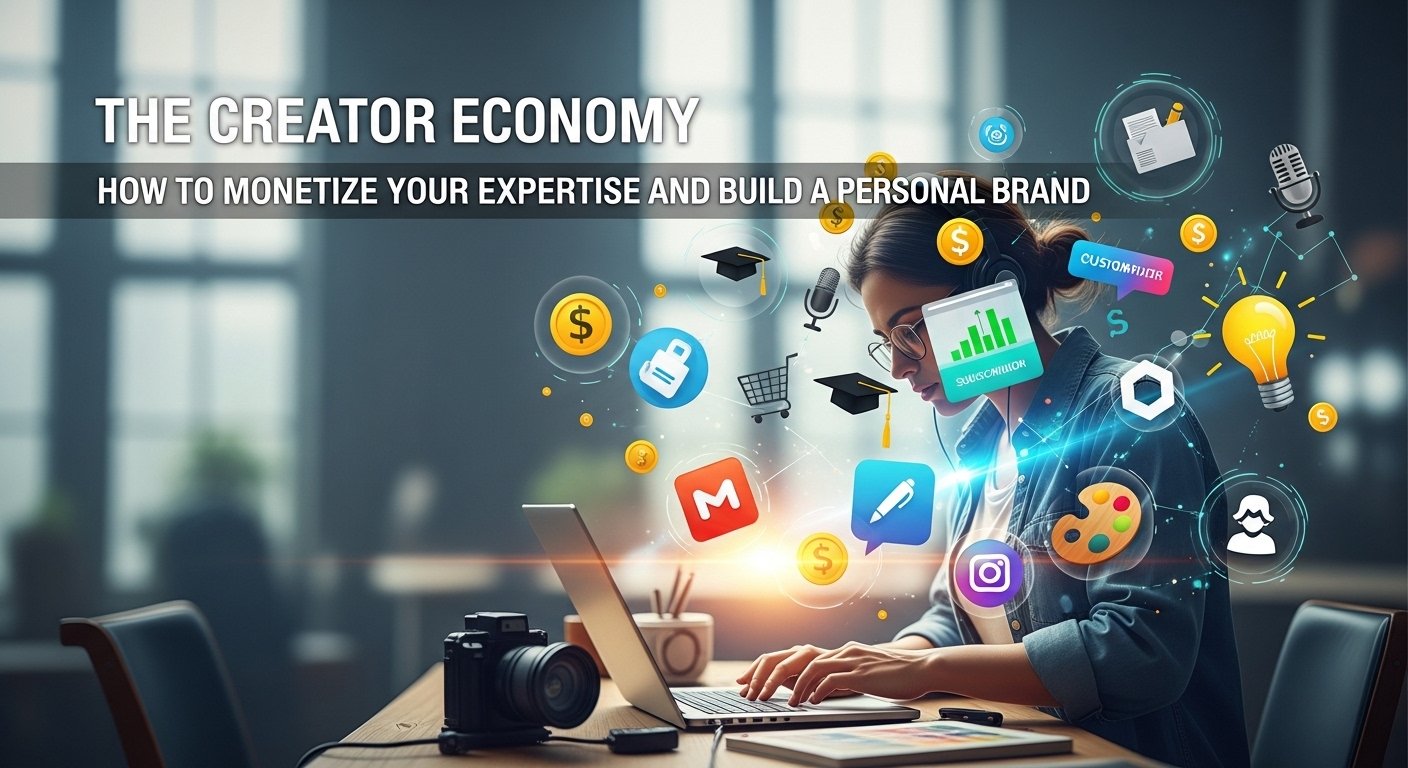
The creator economy is the greatest wealth-building opportunity of our time. While traditional careers offer linear income growth, creators can build exponential wealth by leveraging their expertise, audience, and content.
In 2026, over 50 million people worldwide identify as content creators. But only a fraction understand how to monetize effectively. Most struggle to turn followers into dollars.
This guide changes that. Whether you’re an expert in your field, a skilled professional, or someone with unique experiences to share, you can build a creator business that generates multiple streams of income from your expertise.
The Key Insight: In the creator economy, your expertise is your most valuable asset. You don’t need a massive following to make money—you need the right strategy. A creator with 10,000 engaged followers who trust them can outearn an influencer with 1 million passive followers. Focus on depth of audience relationship, not breadth of reach.
Understanding the Creator Economy
The creator economy is the ecosystem where individuals monetize their creativity, expertise, and content directly to audiences—without traditional intermediaries like employers or publishers.
The Creator Economy by the Numbers
THE SCALE OF THE OPPORTUNITY:

Total Creators: 50+ million worldwide
Full-Time Creators: 2+ million
Creators Earning $50K+/year: 200,000+
Creators Earning $1M+/year: 50,000+

Market Size:
- Creator Economy Value: $250+ billion (2026)
- Expected Growth: $500+ billion by 2028
- Creator Platform Revenue: $50+ billion annually

The shift is massive:
- YouTube Partner Program: $30 billion paid to creators
- TikTok Creator Fund: $1 billion+
- Substack: $300+ million paid to writers
- Patreon: $3.5+ billion paid to creators
Why the Creator Economy Now
- Platform infrastructure: YouTube, TikTok, Instagram, Substack—all built for creators
- Payment systems: Stripe, PayPal, Patreon—monetization is one click away
- Trust economy: Audiences trust individuals over brands
- Remote work: Location independence enables content creation
- Knowledge demand: People pay premium for expertise and guidance
- Attention economy: Quality content is scarce; creators capture attention
The Creator Economy Stack
| Layer | Function | Examples |
|---|---|---|
| Content Platform | Create and distribute content | YouTube, TikTok, Instagram, LinkedIn |
| Monetization Platform | Convert audience to revenue | Patreon, Substack, Gumroad, Teachable |
| Payment Processor | Handle transactions | Stripe, PayPal |
| Email/CRM | Own your audience | ConvertKit, Mailchimp, ActiveCampaign |
| Community | Deepen relationships | Discord, Circle, Slack |
| Analytics | Track and optimize | Creator platforms’ analytics |
The Creator Truth: The creator economy isn’t a trend—it’s a fundamental shift in how work and wealth are distributed. Traditional careers are being disrupted. But this shift creates unprecedented opportunities for those who build creator businesses. The time to start is now.
Monetization Models: How Creators Make Money
There are as many monetization models as there are creators. Here are the proven paths.
The Creator Monetization Framework
CREATOR REVENUE MODELS:

DIRECT MODELS (Audience pays you directly)
├── Digital products (courses, ebooks, templates)
├── Services (coaching, consulting, freelancing)
├── Memberships (monthly subscriptions)
├── Live experiences (workshops, events)
└── Tips and donations (Ko-fi, Buy Me a Coffee)

INDIRECT MODELS (Platform pays based on engagement)
├── Ad revenue (YouTube, blogs, podcasts)
├── Brand sponsorships (paid partnerships)
├── Affiliate marketing (commission on sales)
└── Platform funds (Creator funds, grants)

HYBRID MODELS (Multiple income streams)
├── Combines direct and indirect
├── Diversified revenue
└── Sustainable long-term
Model 1: Digital Products
Sell your expertise as products—courses, ebooks, templates, and more.
- Earnings potential: $1,000-100,000+/month
- Time to first sale: 2-6 months
- Best for: Experts with teachable knowledge
- Platforms:
Model 2: Services (Coaching, Consulting, Freelancing)
Trade your expertise for hourly or project-based fees.
- Earnings potential: $1,000-50,000+/month
- Time to first client: 1-3 months
- Best for: Those with professional expertise
- Platforms:
Model 3: Memberships and Subscriptions
Build ongoing relationships with recurring revenue.
- Earnings potential: $500-50,000+/month
- Time to first subscriber: 3-6 months
- Best for: Creators with engaged communities
- Platforms:
Model 4: Brand Sponsorships
Partner with brands for paid content partnerships.
- Earnings potential: $500-100,000+/campaign
- Time to first sponsor: 3-12 months (depending on audience)
- Best for: Creators with engaged audiences
- Platforms:
Model 5: Ad Revenue
Earn from content views through advertising.
- Earnings potential: $100-10,000+/month (varies widely)
- Time to eligibility: Varies by platform
- Best for: High-volume content creators
- Platforms:
Model 6: Affiliate Marketing
Earn commissions by promoting other people’s products.
- Earnings potential: $100-10,000+/month
- Time to first sale: 1-3 months
- Best for: Creators reviewing or recommending products
- Platforms:
Step 1: Build Your Personal Brand
Your personal brand is your most valuable asset. It differentiates you and attracts your ideal audience.
The Personal Brand Framework
BRAND = EXPERTISE + PERSONALITY + UNIQUE PERSPECTIVE

COMPONENTS OF A STRONG PERSONAL BRAND:

1. NICHE
   - Specific area of expertise
   - Clear target audience
   - Unique positioning

2. VALUE PROPOSITION
   - What you teach/create
   - Who it's for
   - Why you're different

3. PERSONALITY
   - Your voice and tone
   - Values and beliefs
   - Authenticity and relatability

4. VISUAL IDENTITY
   - Name/handle
   - Profile photo
   - Colors and aesthetic
   - Consistent imagery
Finding Your Niche
NICHE SELECTION CRITERIA:

1. EXPERTISE
   - What do you know deeply?
   - What have you accomplished?
   - What can you teach?

2. PASSION
   - What would you create content about anyway?
   - What keeps you engaged long-term?

3. MARKET
   - Are people paying for this expertise?
   - Is there an audience searching for this?
   - Will brands pay to reach this audience?

4. COMPETITION
   - Is there some competition? (Proves demand)
   - Can you differentiate?

5. SUSTAINABILITY
   - Can you create content on this for 5+ years?
   - Will this remain relevant?
Niche Examples
| Too Broad | Well Defined |
|---|---|
| “Marketing” | “Email marketing for e-commerce brands doing $100K-$1M” |
| “Fitness” | “Strength training for women over 40” |
| “Business” | “SaaS pricing strategy for early-stage founders” |
| “Parenting” | “Attachment parenting for working moms” |
| “Photography” | “Real estate photography for realtors” |
| “Cooking” | “Plant-based meal prep for busy professionals” |
Brand Voice and Personality
DEVELOPING YOUR BRAND VOICE:

Questions to Answer:

1. What are your core values?
   → The beliefs that drive your content

2. How do you want people to feel?
   → Empowered? Inspired? Supported? Challenged?

3. What's your tone?
   → Professional? Casual? Edgy? Warm?

4. What makes you different?
   → Your background? Perspective? Approach?

5. What stories define you?
   → Your journey, failures, breakthroughs

BRAND VOICE EXAMPLES:

"The Encouraging Expert"
→ Warm, supportive, practical
→ Makes complex topics accessible
→ Focus on actionable steps

"The Provocateur"
→ Challenges conventional thinking
→ Bold opinions, debates
→ Sparks conversation

"The Thought Leader"
→ Deep expertise, research-backed
→ Speaks at events, quoted in media
→ Positioned as authority

"The Relatable Friend"
→ Authentic, shares personal stories
→ Normalizes struggles
→ Builds intimate community
Visual Brand Identity
- Profile photo: Professional headshot or consistent personal image
- Username/handle: Consistent across platforms
- Bio: Clear value proposition in limited characters
- Colors: Consistent color palette across content
- Fonts: Consistent typography
- Templates: Branded content templates for recognition
Personal Brand Warning: Don’t try to be everything to everyone. The most successful creators are polarizing in the best way—they attract their ideal audience fiercely while others drift away. A personal brand that everyone “kind of likes” will resonate with no one. Stand for something specific.
Step 2: Choose Your Content Platforms
Different platforms serve different purposes. Choose based on your content type and audience.
Platform Comparison
| Platform | Content Type | Best For | Monetization |
|---|---|---|---|
| YouTube | Long video | Evergreen content, tutorials | Ad revenue, sponsorships, courses |
| TikTok | Short video | Viral reach, younger audience | Brand deals, redirects to own offers |
| Photo, Reels, Stories | Visual content, lifestyle | Sponsorships, affiliates, shops | |
| Articles, posts | B2B, professional | Consulting, services, B2B offers | |
| Twitter/X | Short text | Thought leadership, news | Subscriptions, sponsorships |
| Newsletter | Long-form text | Deep audience, direct relationship | Subscriptions, products, services |
| Podcast | Audio | Conversations, interviews, depth | Sponsorships, listeners, premium content |
Choosing Your Primary Platform
PLATFORM SELECTION FRAMEWORK:

Choose Based On:

1. CONTENT TYPE
   - Video → YouTube, TikTok, Instagram
   - Written → Newsletter, LinkedIn, Medium
   - Audio → Podcast
   - Visual → Instagram, TikTok, Pinterest

2. AUDIENCE
   - Age: Younger = TikTok, Instagram
   - Professional = LinkedIn, Newsletter
   - Niche communities = Reddit, Discord

3. MONETIZATION PLAN
   - Ad revenue → YouTube, podcasts
   - Direct sales → Any platform with bio links
   - Sponsorships → Instagram, YouTube, TikTok
   - Subscriptions → Substack, Patreon

4. PERSONAL PREFERENCE
   - Where do you enjoy creating?
   - What feels natural?
   - Where will you be consistent?
The Platform Strategy
THE CONTENT DISTRIBUTION STRATEGY:

PRIMARY PLATFORM (1)
- Where you create most content
- Where your audience is most active
- Where you have biggest following

DISTRIBUTION PLATFORMS (2-3)
- Repurpose content from primary
- Drive traffic back to primary
- Build secondary audiences

EXPERIMENTAL PLATFORMS (1-2)
- Test new formats
- Reach new audiences
- Learn what's working

Example Strategy:
Primary: YouTube (long tutorials)
Distribution: TikTok (clips), Instagram (visual)
Experimental: LinkedIn (written thought leadership)

All drive to: Email list (own the relationship)
Platform-Specific Best Practices
- YouTube: SEO-focused titles, compelling thumbnails, consistent posting schedule
- TikTok: Hook in first 3 seconds, trends, authentic content, daily posting
- Instagram: Visual aesthetic, Reels for reach, Stories for connection
- LinkedIn: Professional value, thought leadership, engagement
- Substack: Consistent newsletter, engaged readership, paid subscriptions
Step 3: Build and Grow Your Audience
Followers are vanity; engaged audiences are business. Focus on building genuine relationships.
The Audience Growth Framework
- Create valuable content: Teach, inspire, or entertain your audience
- Be consistent: Post on schedule, build habits
- Engage authentically: Reply to comments, join conversations
- Leverage distribution: Repurpose across platforms
- Collaborate: Partner with complementary creators
- Build owned audience: Move followers to email list
Content Strategy
THE CONTENT FRAMEWORK:

PILLAR CONTENT (20%)
- In-depth, comprehensive content
- Evergreen value
- Repurpose-able
- Examples: Ultimate guides, tutorials, deep dives

REGULAR CONTENT (60%)
- Consistent value delivery
- Based on pillar content
- More frequent, shorter
- Examples: Tips, how-tos, quick wins

ENGAGEMENT CONTENT (20%)
- Community building
- Conversation starters
- Behind-the-scenes
- Examples: Q&As, polls, stories, lives

BALANCE:
- Value first, always
- Mix of educational and personal
- Consistent quality over frequency
Content Creation Tools
- Canva: Social media graphics, presentations
- OBS Studio: Video recording (free)
- Descript: Video/audio editing, transcription
- Headliner: Audiograms for podcasts
- Later: Instagram scheduling
- Buzzsprout: Podcast hosting
Growth Tactics
- Consistency: Post on schedule, build expectation
- SEO optimization: Research keywords, optimize titles
- Collaboration: Guest appearances, duets, collaborations
- Trends: Participate in relevant trends early
- Cross-promotion: Share content across platforms
- Engagement: Reply to every comment, DM new followers
- Giveaways: Partner with brands for contests
- CTA strategy: Ask for follows, shares, saves
Building an Email List
WHY EMAIL MATTERS:

- You own the relationship (platforms can ban you)
- Direct access to your audience
- Higher conversion than social media
- Sustainable, platform-independent income

EMAIL LIST GROWTH STRATEGIES:

Lead Magnets:
- Free ebook or guide
- Checklist or template
- Mini-course
- Exclusive newsletter
- Discount or bonus

Placement:
- Bio link
- Every piece of content CTA
- Exit-intent popups
- Social media posts

Platforms:
- ConvertKit (built for creators)
- Mailchimp (free tier)
- ActiveCampaign (advanced)
- Klaviyo (e-commerce)
Audience Building Truth: Building an audience takes time—usually 6-12 months of consistent effort before meaningful traction. But the creators who succeed are the ones who show up consistently, even when engagement is low. Trust the process. Every piece of content builds your audience, even if the results aren’t immediate.
Step 4: Monetize Your Audience
Once you have an audience, it’s time to convert attention into revenue. Here are the proven monetization paths.
The Monetization Sequence
MONETIZATION TIMELINE:

PHASE 1: MONTHS 1-6
- Build audience and trust
- First free value delivery
- Establish expertise and authority

PHASE 2: MONTHS 6-12
- Launch first low-ticket offer ($9-47)
- Build email list
- Test pricing and offers

PHASE 3: MONTHS 12-18
- Launch mid-ticket offer ($47-197)
- Build affiliate partnerships
- Begin sponsorship conversations

PHASE 4: MONTHS 18-24
- Launch high-ticket offer ($197-997+)
- Build recurring revenue
- Scale successful offers

PHASE 5: YEAR 2+
- Optimize and scale
- Build product ecosystem
- Create multiple income streams
Creating Your Offer Stack
THE OFFER STACK FRAMEWORK:

FREE (Lead Generation)
├── Valuable content
├── Free resources
└── Email list signup

ENTRY TIER ($9-97)
├── eBooks, guides
├── Templates, checklists
├── Mini-courses
└── Low commitment

CORE TIER ($97-497)
├── Online courses
├── Workshops
├── Templates bundles
└── Group programs

PREMIUM TIER ($497-2,997)
├── Comprehensive programs
├── Coaching containers
├── Done-with-you services
└── Premium community

HIGH-TICKET ($2,997+)
├── 1:1 coaching
├── Mastermind
├── Implementation programs
└── Enterprise offerings
Launching Your First Product
PRODUCT LAUNCH FRAMEWORK:

Pre-Launch (4-6 weeks before):
- Build anticipation
- Tease the product
- Collect waitlist signups
- Create content around the topic

Soft Launch (1-2 weeks before):
- Early access to waitlist
- Gather testimonials
- Refine based on feedback
- Build launch momentum

Launch (1 week):
- Open doors to public
- Email list notification
- Social media push
- Special pricing for launch

Post-Launch (ongoing):
- Support customers
- Gather reviews
- Consider evergreen version
- Plan next product
Service-Based Monetization
SERVICES FOR CREATORS:

Coaching/Consulting:
- 1:1 calls at $97-497/hour
- Package deals at $497-2,997+
- Monthly retainer at $997-4,997/month

Freelancing:
- Offer services related to your expertise
- Use audience as portfolio
- Higher rates due to inbound authority

Speaking:
- Keynotes at $2,000-50,000+
- Workshops at $1,000-10,000
- Virtual events at $500-5,000

Facilitation:
- Lead workshops
- Host retreats
- Run group programs
Brand Sponsorships
GETTING YOUR FIRST BRAND DEAL:

Step 1: Build Media Kit
- Audience demographics
- Engagement rates
- Past collaborations
- Brand fit examples

Step 2: Find Brands
- Products you already use
- Brands targeting your audience
- Influencer platforms (Influence.co, Aspire)
- Direct outreach

Step 3: Pitch Effectively
- Personalized outreach
- Clear value proposition
- Specific campaign ideas
- Professional rates

Step 4: Deliver Results
- Exceed expectations
- Provide metrics
- Build long-term relationships
- Request testimonials

TYPICAL RATES (10K-100K followers):
- Instagram post: $100-500
- Story: $50-250
- YouTube video: $200-2,000
- TikTok: $100-500
- Newsletter: $50-500
Real-World Creator Success Stories
Scenario 1: The Industry Expert Turned Thought Leader
THE START:
David spent 15 years in software sales.
He knew enterprise SaaS inside and out.
At 40, he was burned out but had massive knowledge.

THE PIVOT:
He started a LinkedIn newsletter:
"SaaS Sales Strategies for Modern Teams"

Month 1-3: Learning Phase
- Posted 3x/week on LinkedIn
- Wrote newsletter weekly
- Grew to 2,000 followers

Month 4-6: Traction Phase
- First viral post (50K impressions)
- Grew to 15,000 followers
- Launched free email course

Month 7-12: Monetization Phase
- 50 paying students for course ($97 each)
- First brand deal ($1,500)
- Consulting clients ($2,000/month)

Year 2:
- 50,000 newsletter subscribers
- $5,000/month from courses
- $3,000/month from consulting
- $4,000/month from sponsorships
- Total: $12,000/month

Year 3:
- 150,000 newsletter subscribers
- Launched premium community ($49/month)
- 300 members = $14,700/month
- Published book
- $35,000+/month total

KEY INSIGHT:
David didn't have a huge following.
He had a specific expertise and a clear audience.
His value came from depth, not breadth.
Scenario 2: The Hobbyist Turned Course Creator
THE START:
Maria loved photography as a hobby.
She shared photos on Instagram.
At 30,000 followers, she realized her potential.

THE OPPORTUNITY:
People kept asking: "How do you edit your photos?"
She started sharing Lightroom presets.

Month 1: First Product
- Created preset pack
- Listed on Etsy
- Sold 20 packs at $15 = $300

Month 6: Growing Store
- Created more preset packs
- Added YouTube tutorials
- Grew to 1,000 sales
- $15,000 total revenue

Year 1: Multiple Streams
- Preset packs: $2,000/month
- YouTube ad revenue: $500/month
- Affiliate (camera gear): $300/month
- Total: $2,800/month

Year 2: Course Pivot
- Launched "Mobile Photography Mastery" course
- $97 price point
- 500 students = $48,500
- Added coaching ($197/month, 20 clients)

Year 3:
- 80,000 Instagram followers
- 100,000 YouTube subscribers
- Course: $8,000/month
- Coaching: $4,000/month
- Presets: $3,000/month
- Sponsorships: $2,000/month
- Total: $17,000/month

KEY INSIGHT:
Maria turned a hobby into a business.
Her audience grew because she shared authentically.
Products solved problems her audience already had.
Scenario 3: The Podcast Host Building Authority
THE START:
James hosted a podcast interviewing entrepreneurs.
After 100 episodes, he had loyal listeners but no income.

THE REVELATION:
His audience trusted his recommendations.
Time to monetize that trust.

Year 2: First Revenue Streams
- Affiliate links in show notes
- $500/month average

Year 3: Expanding
- Launched premium feed ($5/month)
- 200 subscribers = $1,000/month
- Added Patreon ($10/month tier)
- 150 supporters = $1,500/month
- Total: $3,000/month

Year 4: Product Launch
- Launched "Podcast Launch Course"
- $197 price point
- 300 students = $59,100
- Added community ($29/month)
- 400 members = $11,600/month

Year 5: Full-Time Creator
- 500,000 podcast downloads/month
- Sponsorships: $8,000/month
- Course: $5,000/month
- Community: $12,000/month
- Coaching: $3,000/month
- Total: $28,000/month

KEY INSIGHT:
James built authority through consistent content.
His podcast was the foundation.
Products and services amplified his expertise.
Scenario 4: The Newsletter Writer Building Subscriptions
THE START:
Aisha wrote about personal finance.
She had a blog but struggled with ad revenue.

THE PIVOT:
She launched Substack newsletter in 2024.
"Honest Money Talk for Real People"

Month 1-3: Building Foundation
- Posted 2x/week
- Grew to 1,000 subscribers
- No monetization yet

Month 4-6: First Paying Members
- Launched paid tier ($7/month)
- 100 paying subscribers = $700/month
- Maintained free tier

Month 7-12: Growing Subscribers
- Reached 10,000 total subscribers
- 500 paying = $3,500/month
- Added annual option ($70/year)
- 200 annual = $14,000 upfront

Year 2:
- 30,000 total subscribers
- 2,000 paying = $14,000/month
- Annual renewals: $15,000
- Sponsorships: $2,000/month

Year 3:
- 80,000 subscribers
- 5,000 paying = $35,000/month
- Launched "Money Makeover" course ($297)
- 400 students = $118,800
- Total: $50,000+/month

KEY INSIGHT:
Aisha built direct relationships through writing.
Her email list was her most valuable asset.
Subscriptions created sustainable, predictable income.
Step 5: Scale Your Creator Business
Once you have traction, scale systematically. Multiple income streams provide security and growth.
Building Multiple Income Streams
THE INCOME STREAM PORTFOLIO:

FOUNDATION (Start here)
├── Primary content platform
├── Email list building
└── First product or service

GROWTH (Add these)
├── Course or digital product
├── Consulting or coaching
├── Brand sponsorships
└── Affiliate marketing

SCALE (Build these)
├── Membership or subscription
├── Community
├── Product ecosystem
└── Team and systems

DIVERSIFY (Expand)
├── New platforms
├── New formats
├── New niches
└── New products
The Creator Productivity Stack
- Notion: All-in-one workspace for content planning
- Asana: Project management
- Trello: Simple task boards
- Cal.com: Scheduling and booking
- Loom: Async video communication
- Zapier: Automation between tools
Hiring and Outsourcing
WHEN AND HOW TO HIRE:

First Hire: Virtual Assistant ($500-2,000/month)
- Content scheduling
- Basic editing
- Community management
- Where: Upwork, Fiverr, OnlineJobs.ph

Second Hire: Content Editor ($1,000-3,000/month)
- Video editing
- Transcription
- Blog editing
- Design work

Third Hire: Operations Manager ($3,000-6,000/month)
- Manage other contractors
- Handle customer service
- Oversee systems

Fourth Hire: Content Creator ($2,000-5,000/month)
- Help create content
- Script writing
- Research

Focus on:
- Delegate what you dislike
- Delegate what takes time but doesn't require your expertise
- Keep strategy, vision, and client relationships
Automation Systems
AUTOMATION OPPORTUNITIES:

Content Distribution:
- Auto-post to platforms
- Schedule social media
- Cross-post content

Email Marketing:
- Welcome sequences
- Product launch automations
- Re-engagement campaigns

Customer Service:
- FAQ bots
- Ticket routing
- Response templates

Sales:
- Landing pages
- Checkout flows
- Upsell sequences

Payment:
- Recurring billing
- Invoice automation
- Affiliate payments
The Scaling Truth: Your first dollar from creating is proof of concept. Your first $1,000/month is validation. Your first $10,000/month is a real business. Keep iterating, keep building, keep creating. The creator economy rewards those who provide genuine value consistently.
Creator Economy Mistakes to Avoid
The Top 10 Creator Mistakes
| Mistake | Why It Fails | The Fix |
|---|---|---|
| Waiting to monetize | Misses early momentum | Plan monetization from start |
| No niche focus | Competing with everyone | Get specific, own a corner |
| Chasing trends only | No evergreen foundation | Balance trending with timeless |
| Ignoring email list | Platform dependent | Build owned audience from day 1 |
| No consistency | Algorithms punish inconsistency | Set realistic schedule, stick to it |
| Copying others | No unique voice | Develop authentic perspective |
| Neglecting community | Transaction-only relationship | Engage deeply, build loyalty |
| Single income stream | Fragile business | Build multiple revenue streams |
| Comparison trap | Discouragement, inconsistency | Focus on your own journey |
| Giving up too soon | Most success takes 2-3 years | Commit for the long game |
The Most Common Mistake: Creators spend months building content without thinking about monetization, then wonder why they can’t make money. Monetization should be part of your strategy from day one. Not in a pushy, salesy way—but with a clear plan for how you’ll provide value and capture some of that value as revenue. Content without monetization strategy is a hobby, not a business.
Your Creator Economy Roadmap
Building a creator business is a journey. Here’s how to get started and stay on track.
The 12-Month Creator Plan
MONTHS 1-3: FOUNDATION
□ Define your niche and personal brand
□ Choose primary content platform
□ Set up infrastructure (email, scheduling, analytics)
□ Start posting consistent content
□ Build first 1,000 followers/subscribers
TARGET: Content cadence established

MONTHS 4-6: GROWTH
□ Grow audience to 5,000+
□ Build email list (100+ subscribers)
□ Create first free value (lead magnet)
□ Begin engagement with audience
TARGET: Engaged community forming

MONTHS 7-9: MONETIZATION
□ Launch first digital product or service
□ Set up payment infrastructure
□ Get first paying customers
□ Start brand partnership conversations
TARGET: First $1,000 in revenue

MONTHS 10-12: SCALE
□ Optimize successful offers
□ Add second revenue stream
□ Build affiliate/brand partnerships
□ Consider hiring first help
TARGET: $3,000-5,000/month revenue

YEAR 2 AND BEYOND:
□ Scale to $10,000+/month
□ Build product ecosystem
□ Expand team
□ Build sustainable, diversified business
The Creator Truth: The creator economy isn’t for everyone—it requires consistency, patience, and genuine desire to create value. But for those who commit, it offers something traditional careers rarely can: true leverage. Your knowledge, once created, can be sold infinitely. Your audience, once built, can receive your products forever. The best time to start was years ago. The second best time is now.
The creator economy has created more millionaires in the last five years than any other industry. Not through luck, but through leverage. Your expertise, your content, your audience—these are assets that compound over time. Start building yours today.
Frequently Asked Questions
How many followers do I need to start making money as a creator?
There’s no minimum—creators monetize at every follower count. Some creators with 1,000 followers earn more than those with 1 million through high-ticket offers and engaged communities. However, general benchmarks: 1,000+ for affiliate/small products, 10,000+ for consistent brand deals, 100,000+ for significant ad revenue and sponsorships. Focus on engagement and audience relationship, not just follower count. Tools like ConvertKit help track revenue per follower.
What’s the best platform to start as a creator?
Choose based on your content type and audience: YouTube for long-form video and ad revenue, TikTok for short-form video and viral reach, Instagram for visual content and lifestyle, Substack for written newsletters and subscriptions, LinkedIn for B2B and professional content. Start with one platform, master it, then expand.
How long does it take to make money as a creator?
Most creators see first revenue between 6-18 months of consistent effort. Faster paths: affiliate marketing (1-3 months), services and coaching (3-6 months), digital products (6-12 months). Slower paths: ad revenue (12-24 months for eligibility), brand sponsorships (6-12 months with established audience). The key is consistency—most creators who quit before month 6 never get to see results.
How do creators get paid by brands?
Brand deals typically pay through: (1) Flat fee for content creation, (2) Performance-based (pay per view/sale), or (3) Hybrid (base + performance bonus). Rates depend on follower count, engagement, niche, and deliverables. Use platforms like Influence.co, Aspire, or IZEA to find brand deals, or pitch directly to brands you want to work with.
Do I need to be an expert to be a creator?
No—you need to be ahead of your audience, not the world’s foremost expert. If you’ve accomplished something your audience wants to achieve, you have expertise to share. Many successful creators are only 6-12 months ahead of their audience and document their journey. Your unique perspective, experience, and approach are valuable. You don’t need credentials—just genuine knowledge and the willingness to share it. Platforms like Gumroad let you start selling immediately.
Related Articles
- How to Start a Digital Products Business
- How to Start a Consulting Business from Scratch
- Content Marketing That Actually Converts
- How to Build a Subscription Business Model